
Yes, geofencing is used in digital marketing too, but not to block people. Instead, it sends them ads and offers based on their location.
Have you ever wondered how businesses can catch your attention right when you’re nearby? Maybe you’ve seen an ad pop up on your phone while you were near a coffee shop or a clothing store. That’s not a coincidence, it’s smart marketing!
This clever trick is called geofencing marketing. It’s a way for businesses to create a virtual “fence” around a specific area, like a store or neighborhood, and show ads to people within that space.
It might sound a bit techy but don’t worry because in this article, we’ll break it all down for you. So, are you ready to learn how geofencing works and why it’s such a game-changer for marketing? Let’s dive in!
What is Geofencing Marketing?
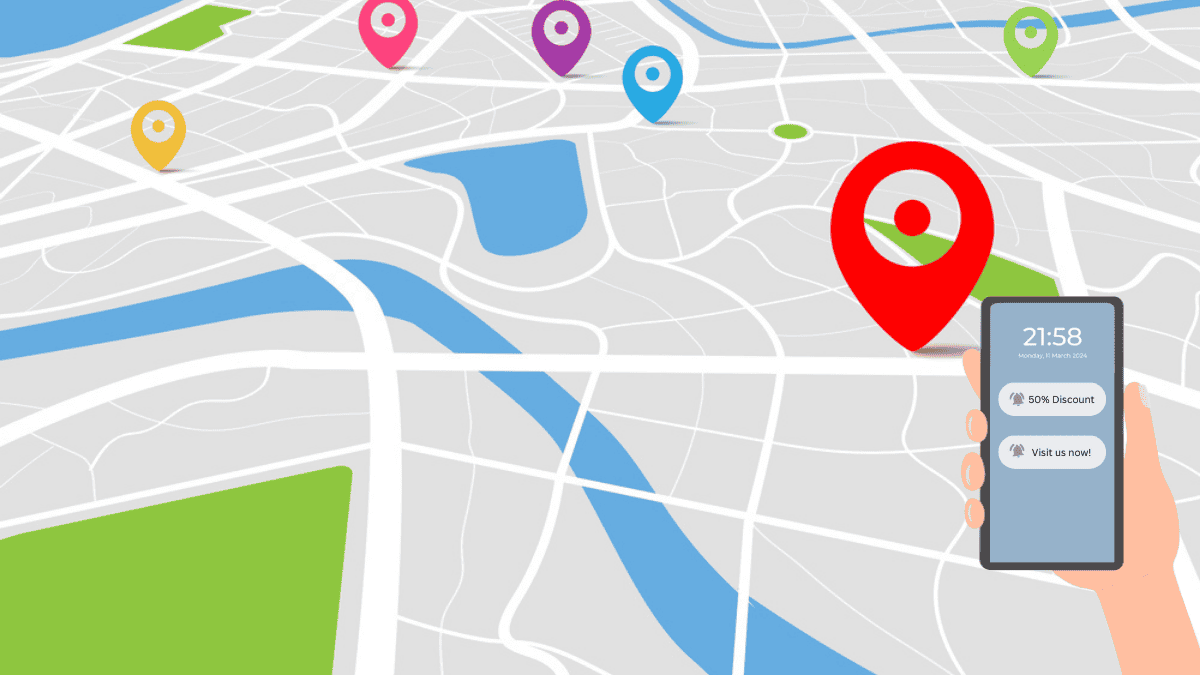
Geofencing marketing is a smart way for businesses to connect with people based on their location. It works by creating a virtual boundary, or “fence,” around a specific area, like a store, mall, or event. When someone enters this boundary with their smartphone, businesses can send them personalized messages or special offers right away.
For example, imagine you’re walking near a coffee shop, and you get a notification on your phone offering a discount on your favorite drink. That’s how geofencing works. It helps businesses reach the right people at the right place and time, making marketing more effective and engaging.
This approach is becoming popular because almost everyone carries a smartphone, and it opens up exciting ways for companies to connect with potential customers.
Now that you know what geofencing is, let’s explore how it actually works.
How Does Geofencing Marketing Work?
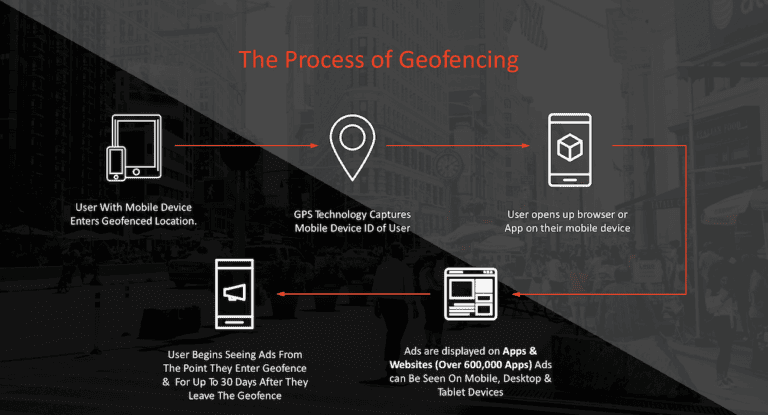
Geofencing creates a virtual boundary around a specific location using GPS, Wi-Fi, Bluetooth, or RFID. When a person with a smartphone enters this predefined area, businesses can trigger location-based actions.
How businesses send notifications & ads
- Mobile apps & push notifications: If a business has a mobile app (e.g., Starbucks, McDonald’s, or a retail store), they can send a push notification when a user enters the geofenced area, but only if the user has the app installed and has given permission for location tracking and notifications.
- Social media & ad platforms: Platforms like Facebook, Instagram, and Google Ads allow businesses to create geofenced ad campaigns. These ads don’t send direct notifications but show sponsored ads in social media feeds or search results to people who have entered or recently visited the location.
- SMS & mobile alerts (requires user consent): Businesses can also use geofencing to send SMS messages if the user has opted in to receive messages. In this way a mall sends an SMS to loyalty program members when they enter, informing them of exclusive in-store discounts.
- In-app experiences (Bluetooth & wi-fi-based geofencing): Some retailers use Bluetooth beacons inside stores to trigger in-app messages or special discounts when a shopper approaches a specific section (e.g., electronics or clothing).
An important fact to be noticed here is that only users who have given explicit permission (e.g., installed an app, enabled location services, opted into SMS alerts, or interacted with geofenced social ads) will receive messages or ads.
Geofencing is also useful for tracking how customers interact with a business. For instance, companies can see how many people visited their location after seeing a geofenced ad. This makes it easier for businesses to understand what works and improve their marketing efforts.
How to Set Up and Run Geofencing Ads for Your Business?
Let’s say XYZ Fast Food Café wants to attract people who are near their café and encourage them to visit. Here’s how they can run a geofencing ad campaign step by step:
Step 1: Decide what your goal is
A business can have different goals, like selling more products, getting more visitors, or getting more customer inquiries.
To understand geofencing marketing, imagine you want more people to visit your shop. You can show ads to people nearby and offer them a special discount to encourage them to come in.
Step 2: Choose a geofencing ad platform
XYZ Café can use platforms like:
- Google Ads (Display Network & YouTube ads)
- Facebook & Instagram Ads (Location-based targeting)
- Snapchat or TikTok Ads (For younger audiences)
- Geofencing-specific platforms (Simpli.fi, GroundTruth, Reveal Mobile)
Step 3: Define the geofence area
- The café sets up a 1 km geofence around its location.
- They also geofence competitor fast-food places nearby (to attract their customers).
A geofence can be also placed near a nearby college campus and offices (since students and workers often buy fast food).
Step 4: Create an attractive ad
XYZ Café designs an eye-catching banner ad with:
- A delicious burger image
- A special offer: “Get 10% OFF if you visit in the next 2 hours!”
- A clear CTA (Call to Action): “Tap to get directions”
They can also run video ads showing fresh burgers being made!
Step 5: Set up & launch the ad
- XYZ Café uploads the ad to their chosen platform.
- They define their audience: People within the geofence who are 18-40 years old and interested in fast food.
- They set a budget of $20 per day for the campaign.
- They launch the campaign and start showing ads to people in the geofenced area.
Step 6: Track & optimize
XYZ Café monitors the campaign to see the following:
- How many people clicked on the ad?
- How many visited the café?
- What time of day works best?
If lunchtime gets more visitors, they increase the ad budget during lunch hours.
Step 7: Measure success & improve
After 2 weeks, XYZ Café notices:
- A 15% increase in new customers.
- Many people redeemed the 10% discount offer.
- Ads near the college performed the best, so they increased spending there.
By using geofencing ads, XYZ Café successfully attracted nearby customers and increased sales. They can now test different offers, expand geofences, or try new ad formats to grow further.
Benefits of Geofencing Marketing
Geofencing can do wonders for your marketing by using location-based technology to target the right people. Here are some key benefits:
1. Better targeting
With geofencing, you can send messages to people in a specific area. So, if someone is near your store, you can let them know about a special deal or event happening inside. This way, your marketing reaches the right people at the right place.
2. More engagement
When people receive messages that are relevant to where they are, they’re more likely to pay attention. The average click-through rate (CTR) for geofenced audiences is 7.5%, while for Facebook ads across all industries, it is only 0.9%. Again, imagine getting a discount notification just as you walk past your favorite coffee shop, wouldn’t you be excited? This real-time connection makes people more interested in what you’re offering.
3. Higher sales and foot traffic
Geofencing marketing helps increase store visits by 20%. By sending out special promotions or offers when customers are nearby, you can encourage them to stop by and make a purchase. For example, a clothing store might send a “20% off today only!” message to people close to their location.
4. Cost-effective marketing
Instead of spending money advertising to everyone, geofencing lets you focus on the people who are most likely to visit or buy from you. This means you can save money while making sure your efforts reach potential customers.
5. Personalization
Geofencing marketing allows you to learn about your audience’s preferences and behaviors. For instance, you might notice younger customers responding to trendy offers, while older customers prefer discounts on essentials. Using this data, you can create messages that match their interests, making your marketing more personal and effective.
6. Smarter decisions with data
Geofencing doesn’t just help you market better; it also gives you useful information. You can see how many people responded to your messages, how long they stayed in your area and more. This helps you understand what works and adjust your strategies as needed.
By targeting the right audience, engaging them at the right time, and offering what they need, you can make your marketing efforts more effective and successful.
Types of Geofencing Marketing
Geofencing offers many ways to connect with customers, and the type you choose depends on your goals. Let’s explore some of the common types of geofencing in simple terms.
1. Location targeting
This is the most well-known type of geofencing. You create a virtual boundary around a specific location, like your store or a competitor’s business. For example, if you own a pizza shop, you can target people near a rival pizza place with a special offer to attract them to your shop.
2. Event targeting
Event targeting focuses on places where events are happening, like concerts, fairs, or trade shows. You set up a geofence around the event location and show ads to people who are there. For example, a sports store might target people at a football game to promote their gear.
3. Address-based targeting
This type of geofencing lets you target specific addresses, like homes or offices. It’s great for businesses that want to reach past customers or decision-makers. For instance, an HVAC company can send ads about maintenance services to the homes of previous clients.
4. Keyword or contextual targeting
Here, you target people based on the kind of content they’re searching for or reading online. For example, a kitchen remodeling company could focus on people looking up “kitchen makeover ideas” and send them ads about their services.
5. Static geofencing
Static geofencing creates fixed boundaries around a place, like a store or office. A retail store might use this to send offers to customers as they enter the area.
6. Dynamic geofencing
Dynamic geofencing allows boundaries to change depending on real-time conditions, like traffic or delivery routes. For instance, a delivery service can update its geofence as the delivery vehicle moves.
7. Proximity geofencing
This is for very small areas using Bluetooth or NFC (near-field communication). It’s common in stores where customers get offers or product details when they’re close to a display or shelf. A bookstore might alert you about a sale when you’re near the fiction section.
8. Custom geofencing
Custom geofencing allows businesses to create unique boundaries based on their needs. You can even overlap geofences and set specific rules for when people receive notifications. For example, a fitness app might target users in different neighborhoods with tailored workout suggestions.
Geofencing offers a variety of ways to reach customers exactly where they are, making marketing more precise and effective. It’s all about choosing the right type for your goals!
Geofencing Marketing Examples
Geofencing is a clever way to use technology to attract customers based on their location. Let’s look at some real-world examples to see how businesses use geofencing to get great results.
1. Taco Bell
Taco Bell used geofencing to target young people under 30 who had their app installed with push notifications enabled. By setting up geofences around their restaurant locations, they sent special offers to people nearby. This simple strategy helped Taco Bell increase its yearly sales by 6%.
2. Burger King
Burger King ran a famous “Whopper Detour” campaign to pull customers away from McDonald’s. They set up geofences around McDonald’s locations and sent notifications to people nearby, offering them a Whopper burger for just one cent. The catch? Customers had to order through the Burger King app and pick it up at their nearest Burger King. This smart idea got over 1 million app downloads in just a few days!
3. American Eagle
American Eagle, a clothing brand, used geofencing to target people in malls where their stores are located. They also sent special offers to customers near competitors’ stores to encourage them to visit American Eagle instead. This strategy boosted their in-store sales by three times, making it a big success.
4. The History Channel
The History Channel teamed up with an app called Foursquare to engage users at historical landmarks. For example, when someone checked in at a location like the White House, they’d receive interesting facts about its history. This helped the channel raise awareness and connect with its audience in a fun way.
These examples show how geofencing can make marketing more exciting and successful.
How to Implement Geofencing in Your Marketing Strategy?
Getting started with geofencing marketing is easier than you think! All you need is an app and GPS coordinates. Here are some simple steps to follow when adding geofencing to your marketing strategy:
1. Understand your audience
Before you start, it’s important to know who your customers are. What are their ages, interests, and shopping habits? When do they shop the most? Understanding your audience will help you create ads they’ll like and respond to.
For example, if you run a coffee shop, and most of your customers are students, you could offer discounts during exam season.
2. Set the right geofence size
Keep your geofence small and focused. A good rule is to stick to a 4-5 minute walking or driving radius around your location.
If your geofence is too big, you might waste money showing ads to people who are too far away to visit. If your store is in a busy city, a small walking radius works best. For places where people drive more, a short driving distance makes sense.
3. Create ads with a clear call-to-action (CTA)
Your ads should tell people exactly what to do. Use CTAs like:
- “Buy one, get one free, today only!”
- “Order now and save 20%!”
A clear message motivates customers to act right away. For example, Starbucks often sends personalized offers, like a discount on your favorite drink, to nearby customers.
4. Use smart targeting techniques
Geofencing works even better when you combine it with other targeting methods, such as:
- Dayparting: Show ads during specific times, like mornings for coffee deals.
- Behavioral targeting: Target users based on their habits, like visiting similar stores.
- Retargeting: Send ads to people who have visited your website or store before.
- Context targeting: Show ads related to what people are searching for, like nearby gyms if they look for fitness tips.
5. Test and adjust your campaigns
Keep an eye on how your geofencing ads are doing. Use analytics tools to see what’s working and make changes if needed. For example, if most people respond to your ads in the afternoon, you can focus your efforts during those hours.
6. Respect customer privacy
Be honest with your customers about how you use their data. Let them know they can trust your app and ads. This builds loyalty and keeps them coming back.
Conclusion
Geofencing marketing is a smart and powerful way to bring more people to your store, website, or social media pages. It works well for businesses of all sizes and can help you connect with the right audience at the right time.
As geofencing technology grows, it will become even more useful for businesses. By staying creative and tracking your results, you can make geofencing a key part of your marketing strategy and reach more people in exciting new ways.
FAQ
Is Geofencing marketing effective?
Yes, geofencing marketing is effective. It helps businesses reach the right people at the right place, increasing engagement and store visits.
How does Starbucks use geofencing?
Starbucks uses geofencing to send special offers and reminders to customers near their stores. When you walk close to a Starbucks, you might get a notification on your phone about a discount or a new drink. This helps Starbucks bring more people into their stores and keep customers happy.
How big should my Geofence radius be?
Your geofence size should match how people reach your location. In cities, a 4–5-minute walking distance works best. In suburban areas, a 4–5-minute driving distance is ideal. Keeping the geofence close to your business helps people see your ads and visit easily.