
Running ads on Google, social media platforms, or marketplaces has become very common these days. Businesses of all sizes use this method to achieve desired results, whether it be increased sales, reaching more people, or branding.
When you’re running online ads, it can be frustrating if you’re not getting the results you expect. Maybe your ads aren’t showing enough, or you’re not reaching as many people as you should. This is where “impression share” comes in.
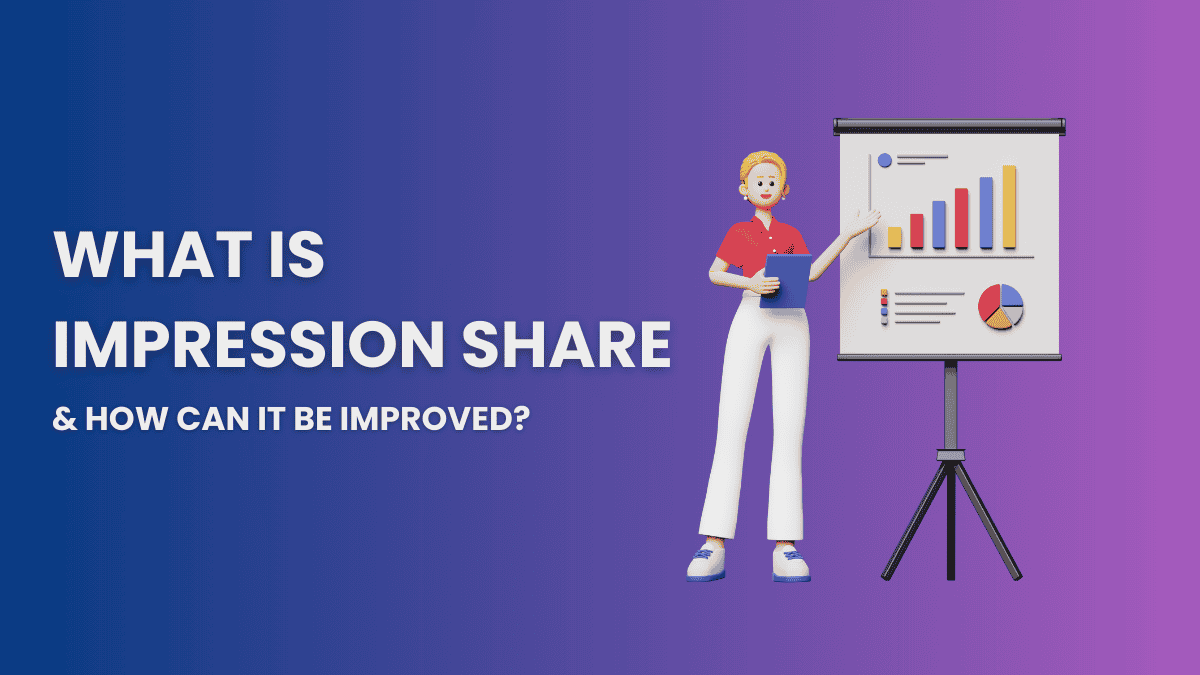
Impression share is a key number that tells you how often your ad is being shown versus how many times it can be shown. Understanding your impression share can help you figure out if you’re missing out on potential views and how to improve your ad performance.
In this post, we’ll explain what impression share is, how it works, and why it’s so important for your ads to be successful.
What is Impression Share?
Impression share is a way to measure how often your ad is shown compared to how many times it could be shown. It’s like a report card for your ad’s visibility.
Several factors determine how often your ad could appear. Some of them are:
- Budget – A low budget can limit how often your ad is shown.
- Ad Rank – Higher bids, better quality, and relevant ads increase chances.
- Competition – If others bid more or have better ads, yours may show less.
- Targeting – Location, device, and audience settings affect visibility.
- Keywords & search volume – Broad match keywords get more chances than exact match.
- Ad Scheduling – Ads won’t show outside set hours.
- Ad Approval – Disapproved or restricted ads won’t show often.
Each time your ad appears on a webpage or search engine results page (like Google) is called an “impression.” Now, your ad may get a chance to appear multiple times, depending on how well it matches the keywords people are searching for, how attractive it is, and how relevant it is to the audience.
In other words, impression share is the percentage of times your ad actually appeared compared to how many times it could have appeared. For example, if your ad had 100 chances to appear, and it appeared 80 times, your impression share would be 80%.
By tracking impression share, you can see if your ad is reaching as many people as it should. If it’s low, you can figure out what’s stopping it and make improvements to get your ad to more people.
How to Check Impression Share in Google Ads?
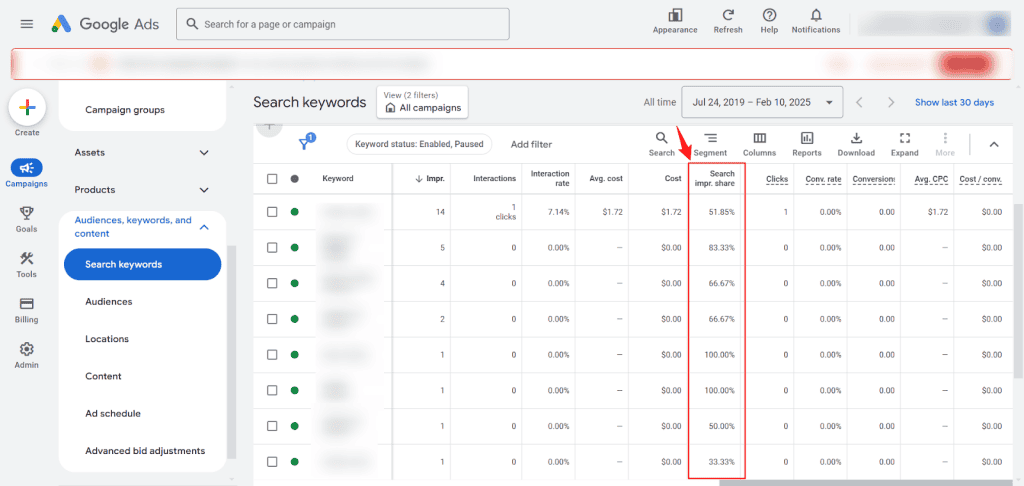
Here are simple steps to check impression share in Google Ads
- Open your Google Ads account and click on the Campaigns icon.
- From the menu, click Campaigns or Ad groups or, go to Audiences, keywords, and content and select Search keywords.
- Click on the columns icon (it looks like three vertical lines).
- In the Competitive metrics menu, tick the boxes for Search impr. share and Display impr. share.
- Click Apply to see the impression share data in your stats table.
Other Ways to See Impression Share
- Add the Impression share column on the Ad groups or Keywords pages.
- Check impression share on the Campaigns, Ad Groups, or Product Groups pages for Shopping ads.
What is the Impression Share Formula?
Impression share can be represented with percentage, which will show you how many times your ad is displayed compared to how many times it can be displayed. You can calculate it using a simple formula:
Impression Share = (Actual Impressions ÷ Total Eligible Impressions) × 100
Here
- Actual impressions are the number of times your ad was shown.
- Total eligible impressions are the number of times your ad could have been shown, based on factors like your ad’s settings, bids, and quality.
- An ad’s eligibility is determined by budget, Ad Rank, competition, targeting settings, keyword relevance, ad scheduling, and compliance with advertising policies.
Let’s say your ad had the chance to appear 5,000 times in a month (total eligible impressions). Out of those, it actually appeared 4,000 times (actual impressions). Using the formula:
Impression Share = (4,000 ÷ 5,000) × 100 = 80%
This means your ad appeared 80% of the times it was eligible to.
By knowing your impression share, you can understand if your ad is reaching its full potential and work on improving it if needed.
What is a Good Impression Share?
A good impression share depends on what type of keywords you are targeting and how competitive they are.
- 95-100%= For branded keywords (like your company name), you should aim for an impression share of 95-100%. These are searches where people are already looking for your brand, so your ad should always be visible.
- 80-90%= For non-branded keywords that don’t have much competition, an impression share of 80-90% is ideal. These keywords are easier to rank for, so your ad can show up most of the time without spending too much.
- ~60%=For highly competitive keywords, an impression share of around 60% is considered good. These keywords are expensive because many advertisers are bidding on them, so it’s better to focus on getting enough impressions without overspending.
A good impression share balances your visibility with your budget, helping you get the best results for your ads. For example:
- If someone searches for your brand, aim for 100%.
- If you’re targeting general but less competitive terms, 80% is great.
- If you’re in a competitive space, 60% might work best.
By setting the right goals for your impression share, you can ensure your ads perform well while staying within budget.
Types of Impression Share in Google Ads
In Google Ads, impression share is more than just a single number. Different types of impression share help you understand how your ads are performing in various areas. Let’s look at the main ones:
Search Impression Share
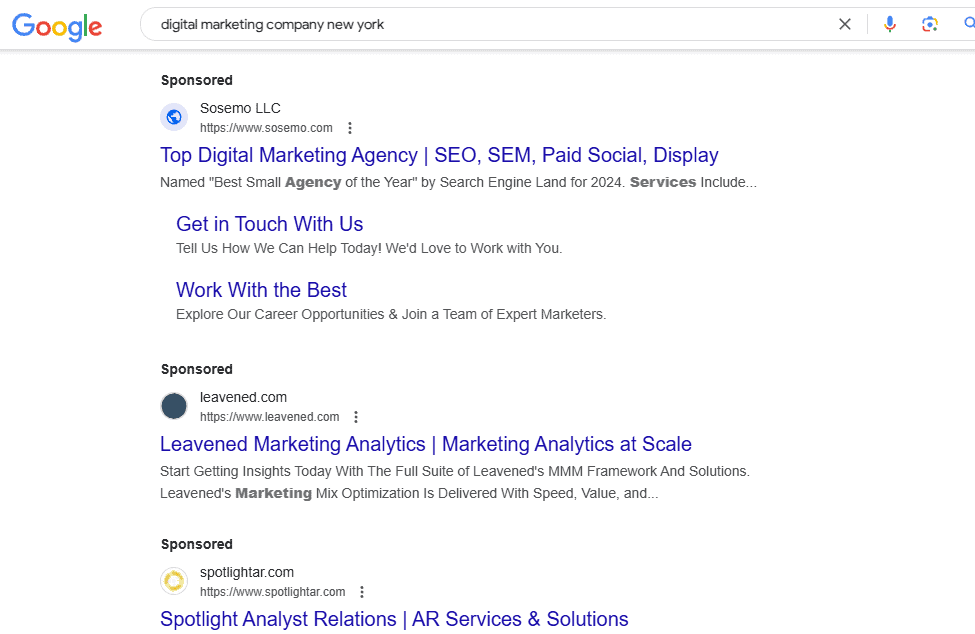
This measures how often your ads appear on the search network compared to how often they appear. The search network includes places like Google Search, Google Maps, Google Shopping, and partner websites.
Display Impression Share

This tracks how often your ads show up on the display network, which includes millions of websites, apps, and videos where Google Ads are displayed. These ads typically appear in spaces like sidebars, banners, or at the bottom of web pages.
- Exact Match Impression Share
This measures how often your ad appears when someone searches using a keyword that matches exactly with your chosen keywords. This type of impression share helps focus on specific, highly relevant searches. For example, if your keyword is “dog food,” the exact match impression share will only count searches for “dog food,” not variations like “best dog food” or “cheap dog food.”
- Search Lost Impression Share (Budget)
This shows the percentage of impressions you missed on the search network because of a limited budget. For instance, if your daily budget runs out early in the day, your ads won’t appear later, reducing your impression share.
- Search Lost Impression Share (Rank)
This tells you how many impressions you missed on the search network because your ad rank was too low. Ad rank depends on factors like your bid amount, ad quality, and relevance. If your rank isn’t high enough, your ads may not appear at all, even if you have the budget.
- Display Lost Impression Share (Budget)
This works like Search Lost Impression Share (budget) but applies to the display network. This tells you how many advertising opportunities you missed because your budget was too small.
- Display Lost Impression Share (Rank)
This tracks how many times your ads did not appear on the display network due to low ad rank. Improving factors such as ad quality or bid can help recover these lost impressions.
Why Are These Types Important?
Each type of impression share gives you a different view of your ad’s performance. For example:
- If your Search Lost Impression Share (Budget) is high, it may mean you need to increase your daily budget.
- If your Search Lost Impression Share (Rank) is high, you might need to improve your ad’s quality or increase your bid.
4 Ways to Improve Impression Share
Improving your impression share means making your ads show up more often to your audience. If your impression share is lower than you’d like, don’t worry—there are a few simple strategies to boost it. Let’s explore them:
- Increase Your Budget
One common reason for low impression share is running out of your daily ad budget too quickly. For example, if your daily budget is $20 and it gets used up by noon, your ads won’t appear for the rest of the day. This means fewer impressions and missed opportunities.
To fix this, try increasing your budget so your ads can run for longer periods. You don’t always have to spend a lot more—sometimes, reallocating your budget to focus on high-performing campaigns can do the trick.
- Adjust Your Targeting
Targeting the right audience and keywords can also improve your impression share.
Keyword Targeting
Your ads are triggered by specific keywords. Some keywords are highly competitive and cost more, while others are less competitive and more affordable. If your impression share is low, you can analyze your keywords and focus on ones that perform well without costing too much. For example, instead of targeting a broad keyword like “shoes,” you could target a more specific keyword like “affordable running shoes.”
Audience Targeting
If you’re running display ads, think about the people you’re trying to reach. Sometimes, expanding your audience can help you gain more impressions. For instance, if you’re selling fitness products, you might expand from targeting gym-goers to also include people interested in yoga or outdoor activities.
- Improve Ad Quality
Google prefers to show ads that are high-quality and relevant. This is where your quality score comes in. Quality score is a measure of how relevant and useful your ads are to the audience. A higher quality score can help you get more impressions without increasing your costs.
Here are some tips to improve your quality score:
- Make Your Ad Copy Better: Write clear and engaging ads that directly match the keywords you’re targeting. For example, if your keyword is “best pet food,” your ad could say, “Discover the Best Pet Food for Happy and Healthy Pets.”
- Enhance Your Landing Page: Ensure the page your ad links to is user-friendly, loads quickly, and provides helpful information related to the ad.
- Focus on Click-Through Rate (CTR): A higher CTR shows that people find your ad relevant. To boost CTR, make your ad eye-catching and include a strong call-to-action like “Shop Now” or “Learn More.”
- Try Geo-Targeting
Geo-targeting means showing your ads in specific locations. Focusing on a smaller area can sometimes increase your impression share. For example, if your business is in New York, targeting only New York City instead of the entire state can help your ads show up more often to the right people.
Improving impression share takes time and effort, but by following these steps, you’ll start to see better results. Remember, small changes can lead to big improvements over time
Conclusion
Impression share is a helpful metric that shows how often your ads appear compared to how often they appear. It helps you see where your ads might be missing out and gives you ideas to make improvements.
If your impression share is low, don’t worry! You can take steps to fix it, like increasing your budget, improving your ad quality, or finding better keywords to target. It’s a great way to make your ads work harder for you without wasting money.
By keeping an eye on your impression share and making small changes, you can ensure more people see your ads. This is especially important if you’re in a competitive space, where standing out can make all the difference.
Remember, digital marketing is all about learning and growing. Impression share is just one of many tools that can help you succeed. Keep experimenting, keep optimizing, and you’ll be on your way to reaching more people with your ads!
FAQs
How do you increase Impression Share?
The easiest way to increase impression share is to raise your bid. A higher bid makes Google show your ad more often. You can also increase your campaign budget so your ad gets more chances to appear. Both steps help your ad reach more people and improve results.
What are the two types of Search Impressions?
There are two types of search impressions. The first is served impressions, counted when an ad is sent to a publisher, even if it doesn’t appear on a user’s screen. The second is downloaded impressions, counted when an ad fully loads on a user’s device, showing what people actually see.
How much for 1,000 impressions on GOOGLE?
On Google Ads, the average cost for 1,000 impressions is usually between $0.51 and $1.00. This applies to both the Google Search Network and the Google Display Network. For example, you might spend around a dollar if your ad is seen 1,000 times.