
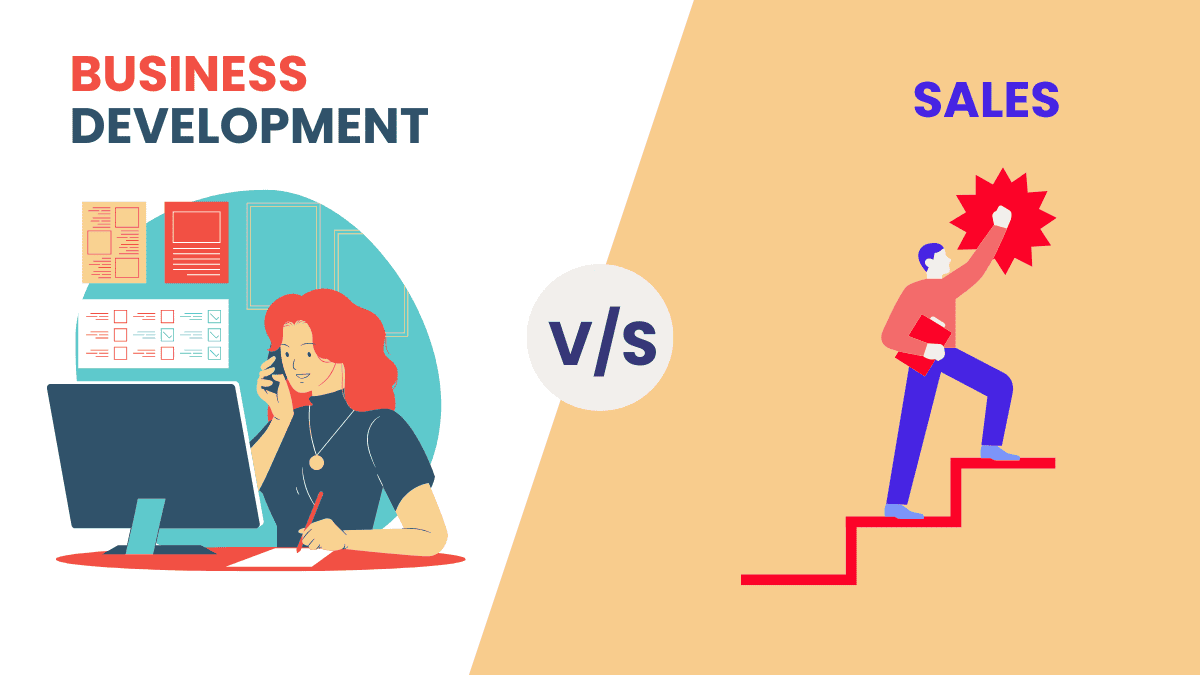
You might think that growing your sales means growing your business, but that’s not true. If you’ve been treating sales and business development as the same thing, it can create problems for startups and small businesses trying to grow.
In smaller teams, one person might handle both roles, finding new opportunities and closing deals. However, mixing these tasks can slow things down as businesses grow and hurt performance.
Understanding the difference between sales and business development is important. It helps you know what each role should focus on and why it matters. By understanding how they work together but stand apart, you can set your business up for better growth and success.
Let’s break it down and make it simple.
What is Business Development?
Business development is about helping a company grow by finding new opportunities. This includes discovering new markets, building strong relationships with customers and partners, and spotting chances to improve the business. They focus on laying the foundation for long-term success.
Business development responsibilities: A business development professional focuses on three main tasks:
- Finding new sales leads.
- Promoting products or services.
- Building and maintaining good relationships with current customers.
Daily tasks for generating leads:
- Researching companies and people online (especially on social media) to find new leads and markets.
- Understanding the needs of other companies and identifying decision-makers.
- Reaching out to potential clients via email or phone to build connections.
- Planning and managing new marketing ideas.
- Attending conferences, meetings, and industry events.
Tasks for selling and closing deals:
- Creating PowerPoint presentations and sales materials.
- Updating clients about new product developments.
- Preparing quotes and proposals.
- Negotiating deals by phone, email, or in person.
- Setting sales goals for the team and ensuring they are achieved.
- Training and supporting team members to improve their skills.
A business development professional explores new possibilities for the company. They might study different markets to see where the company’s products or services could fit. They also work on building trust with other businesses, partners, or clients to create lasting relationships that benefit everyone.
For example, imagine you own a company that makes eco-friendly water bottles. A business development expert would look for:
- Stores to sell your bottles,
- Partnerships with companies that care about the environment,
- Events where your product can be promoted.
Business development also involves understanding what customers need, what’s happening in the market, the competitor’s positioning, and how to use tools like social media to connect with people. It’s not about making a quick sale, it’s about helping the company grow step by step.
What is Sales?
Sales is the process of turning potential customers into actual buyers. It’s all about showing people how your product or service can solve their problems and help them make a decision to buy. The main goal of sales is to bring in money for the company. Sales drives the train.
Sales responsibilities: Sales professionals focus on turning leads into customers and hitting sales goals.
Their main tasks are:
- Reaching out to potential customers.
- Explaining and showing products or services.
- Closing deals and meeting sales targets.
Daily tasks for working with customers:
- Contacting leads given by the business development team or finding their own.
- Making cold calls or sending follow-up emails to potential customers.
- Setting up and attending meetings or product demos.
- Understanding what customers need and suggesting the right products or services.
- Answering questions and solving customer concerns.
Tasks for closing deals and follow-ups:
- Preparing and sharing proposals or contracts.
- Negotiating prices and terms with customers.
- Following up after a sale to make sure customers are happy.
- Keeping records of sales and updates in a CRM system.
- Working with the business development team to plan strategies.
- Achieving monthly or quarterly sales goals.
Sales professionals handle many tasks to make this happen. For example, they contact leads to learn about their needs, explain product features, give demos, and follow up with potential customers.
Let’s say you sell software for small businesses. A salesperson might:
- call a lead,
- explain how the software can save them time,
- show them a demo, and
- help them sign up if they’re interested.
Sometimes, sales teams work with leads that the business development team has found. Other times, they contact new people through cold calls or emails. However, Research by LinkedIn highlights that only 2% of cold calls lead to an appointment (Leap Job). To succeed, salespeople need to understand the product well and be ready to answer questions and solve any concerns. Unfortunately, 42% of salespeople feel they don’t have enough information before making a call.
Difference Between Business Development and Sales
| Aspect | Business
Development |
Sales |
| Main Focus | Long-term growth, new opportunities, and partnerships | Short-term goals, closing deals, and revenue |
| Role | Research, strategy, and relationship building | Direct interaction with leads to sell products/services |
| Target audience | Other businesses, partners, and new markets | Potential customers and decision-makers |
| Responsibilities | Identifying opportunities, market research, and passing leads to sales | Explaining product features, handling objections, and closing sales |
| Goal | Expanding the company’s reach and creating new opportunities | Generating immediate revenue and meeting sales targets |
| Part of process | The initial stage, finding and qualifying leads | The final stage, converting leads into customers |
| Timeline | Focuses on long-term planning and growth | Focuses on short-term results |
Sales and business development are closely connected but focus on different goals. Business development can be considered as the first step in the process. It’s about finding opportunities and building relationships.
On the other hand, sales are the next step, it’s about turning those opportunities into actual deals and revenue.
Why Should Business development and Sales be Separated
WeWork VP of Business Development, Scott Pollack explains that business development teams should focus on finding, evaluating, and chasing opportunities that help the company grow in the long run. This means business development and sales teams should work well together, sales teams focus on closing deals to make money now, while business development works on opening new channels and creating leads for future growth.
As your business grows, it’s important to separate sales and business development teams. Though they work together, these roles require different skills and focus on different tasks.
Here’s why keeping them separate can benefit your business:
1. Different skills are needed for each role
Business development representatives (BDRs) and sales representatives have unique skill sets that suit their specific roles:
- BDRs focus on research, understanding industries, and building relationships with other businesses. They are like explorers, finding new opportunities and qualifying leads.
- Sales reps need strong negotiation and persuasion skills. They focus on closing deals, solving customer problems, and delivering immediate results.
When these teams focus on their strengths, they can perform better.
For example, imagine asking someone to be both a researcher and a negotiator, they might struggle to excel at either. By separating roles, BDRs can specialize in finding opportunities while sales reps can focus on converting them into customers.
2. Different focus areas and goals
BDRs and sales reps also have different priorities:
- BDRs are responsible for identifying potential customers, qualifying leads, and building connections. Their goal is to find the right opportunities and pass them on to the sales team.
- Sales reps aim to close deals and generate revenue. They work with qualified leads to solve problems and meet their sales targets.
For example, a BDR might identify a new market for a company’s software and reach out to potential clients. Once they find someone interested, they pass them to the sales team, who explains the software in detail and closes the deal.
3. Different responsibilities in the sales cycle
The sales process has many stages, and mixing responsibilities can lead to confusion.
- BDRs handle the first stages, like researching markets and qualifying leads from marketing campaigns.
- Sales reps take over when leads are ready to buy. They focus on pitching the product, answering questions, and closing the sale.
When these roles are clear, it prevents overlaps or missed opportunities. It also ensures a smoother customer experience.
By separating sales and business development, your team can work more efficiently, focus on their strengths, and achieve better results. Each team has a clear purpose, and together, they help the business grow.
Optimizing Sales and Business Development Workflows
Your sales and business development teams are key to growing your business and boosting revenue. To ensure their smooth and effective operation, it’s important to streamline their processes.
A well-organized workflow helps both teams focus on what they do best. For example:
- Business development teams can spend more time researching new opportunities and qualifying leads.
- Sales teams can focus on closing deals and helping customers.
By organizing tasks and reducing confusion, you allow each team to work smarter and faster. This not only helps your business grow but also creates a better experience for your customers.
If you feel stuck or unsure where to start, consider consulting experts. Many companies specialize in improving workflows for businesses of all industries. They can study your processes, learn about your goals, and suggest ways to make everything more efficient.
Optimizing workflows isn’t just about saving time; it’s about helping your teams work better together so your business can grow in the right direction.
How do Business Development and Sales Work Together?
Business development and sales are like two sides of the same coin, working together to help a company grow. Even though they have different goals and tasks, they depend on each other to succeed. Let’s break it down.
1. Business development prepares the ground
Business development is like a team that finds and prepares the best opportunities. They research potential customers, identify their needs, and make the first connection. For example, they might reach out to a company that could benefit from your product and learn more about its challenges.
Once business development is pre-qualifies a lead, it passes it to the sales team. This step saves the sales team time by allowing them to focus only on qualified leads who are likely to buy.
2. Sales take it from there
The sales team picks up where business development leaves off. They dive deeper into conversations with leads, show how the product or service solves their problems, and close the deal. For example, if a lead needs a software tool, the sales team will demonstrate how the product works and discuss pricing.
By focusing on different stages of the customer journey, business development and sales can work more efficiently.
3. Sharing knowledge for better results
The relationship doesn’t stop after passing opportunities. Sales teams share valuable feedback with business development teams about what customers like, what problems they face, and what competitors are doing. This information helps business development refine their strategy and find even better leads.
4. Teamwork for growth
When both teams work together, they can achieve great results. Business development creates opportunities, and sales turn them into revenue. This teamwork allows companies to reach more customers, grow their market share, and succeed in the long term.
For example, if business development finds a new market to explore and creates appointments of prospects, the sales team can focus on closing deals there. Together, they ensure no opportunity is missed.
Conclusion
Sales and business development are not about picking one over the other, they work best as a team. Each has its own job. Business development focuses on finding new opportunities, building connections, and planning for growth. Sales take those opportunities and turn them into results by closing deals and making money.
If you want your business to grow, it’s important to understand how these roles work on their own and together. For example, if you’re looking to explore new markets or partnerships, business development is the way to go. But if you want to increase your sales, you need a strong sales team.
The real magic happens when sales and business development work together. They help your business grow faster and more effectively. By understanding their unique strengths and how they support each other, you can build a stronger, more successful company.
No matter where your business stands today, learning about and investing in both sales and business development will help create a brighter future.
FAQs
What factors should one consider when deciding between a career in business development vs sales?
Consider your skills and interests when choosing between a career in Business Development and Sales. Business Development focuses on building relationships, planning strategies, and exploring new markets, while Sales is about meeting targets, persuading customers, and closing deals. Consider what you enjoy more, strategy and planning or direct selling and goal achievement, and pick the role that matches your strengths and career goals.
What is better, business development or sales?
Both are important. Business development finds opportunities, and sales closes deals. They work best together.
What is the difference between business development and sales?
In simple terms, Business Development is about planning, while Sales is about taking action. A Sales Development Representative (SDR) looks for potential customers and creates new leads. They don’t need deep training but may have skills in networking or business.